Occupied Europe · The Holocaust · Poland and Germany
The Warsaw Ghetto Uprising
On the eve of Passover, German forces enter the Warsaw Ghetto to deport its remaining Jews. They are met by gunfire, grenades and petrol bombs.
- Location
- Warsaw Ghetto, occupied Poland
- Jewish fighting groups
- ŻOB, led by Mordechai Anielewicz, and ŻZW
- German commander
- SS Gen Jürgen Stroop
- Uprising crushed
- 16 May 1943
- War clock
- Day 1,327 of 2,194
In 1942 the Germans deported around 300,000 Jews from the Warsaw Ghetto to the Treblinka extermination camp. By early 1943 around 50,000 to 60,000 remained. Young people in underground organisations, knowing what deportation meant, prepared to fight. In January 1943 armed resistance had already disrupted a round-up.
The uprising
On 19 April 1943, the eve of Passover, German troops and police entered the ghetto to complete its destruction. Jewish fighters, armed mostly with pistols, a few rifles and homemade bombs, attacked them from buildings and bunkers and drove them back on the first day. The ghetto population hid in cellars and bunkers.
Destruction
SS General Jürgen Stroop took command and ordered the ghetto burned building by building. Fighting went on for nearly a month. On 8 May the command bunker at Miła 18 was surrounded; Mordechai Anielewicz and many others died. On 16 May Stroop blew up the Great Synagogue and declared that the Jewish quarter of Warsaw no longer existed.
Sources and further reading
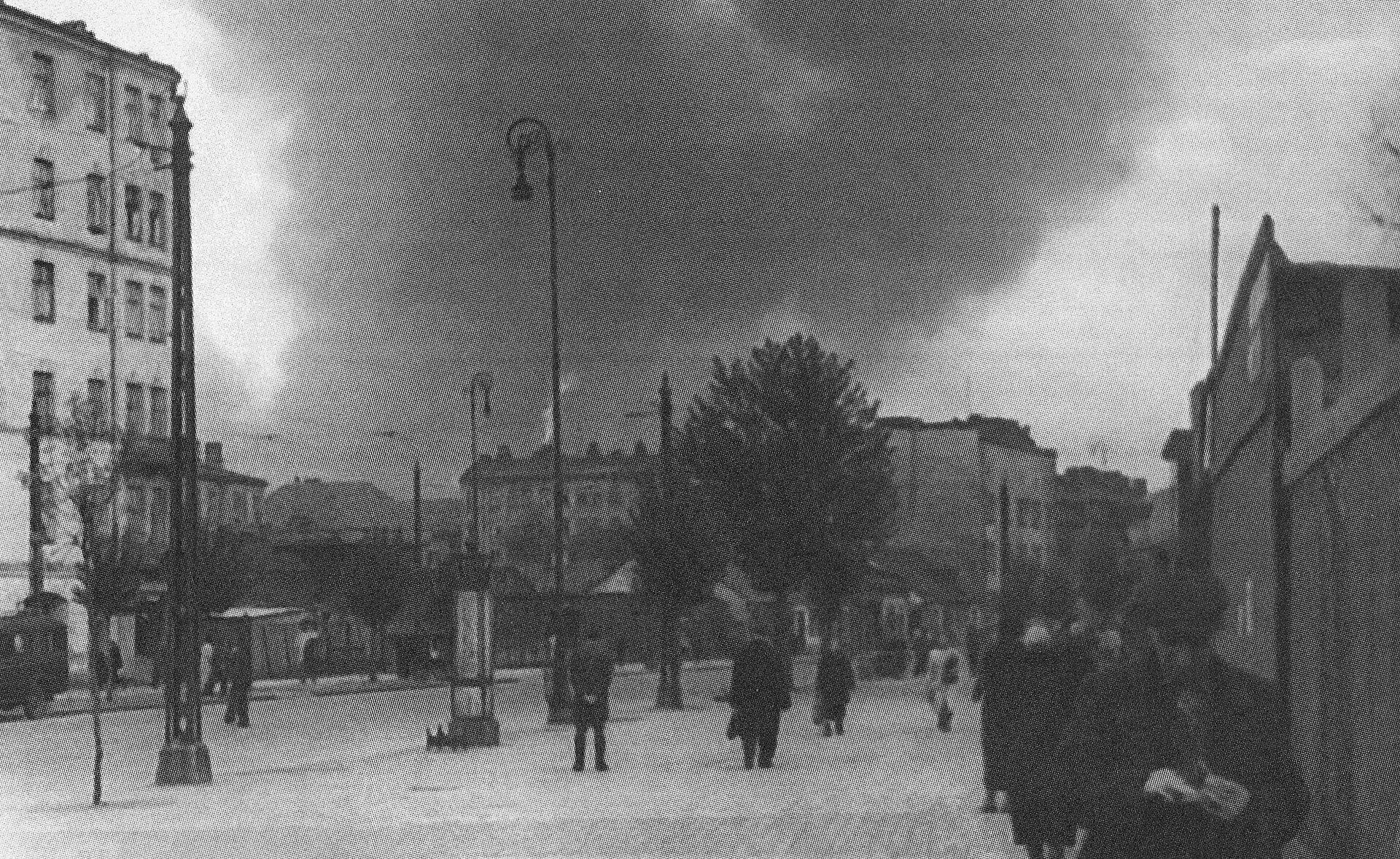
Lead image: Smoke over the Warsaw Ghetto during the uprising. nieznany/unknown, Public domain, via Wikimedia Commons. See our sources and image policy.
 United Kingdom
 United States
 Soviet Union
 Germany
 Japan
 France
 Poland
 South Africa