Western Europe · Air War · Britain vs Germany
The Hardest Day
Large German raids hit the RAF airfields at Kenley and Biggin Hill. More aircraft are destroyed on both sides than on any other day of the Battle of Britain.
- Main targets
- RAF Kenley, Biggin Hill, Ford, Gosport and Thorney Island
- Kenley raid
- Included a low-level attack by Dornier bombers
- Stuka losses
- So heavy that the Ju 87 was largely withdrawn from the battle
- Name
- Coined by the historian Alfred Price
- War clock
- Day 353 of 2,194
By mid-August the Luftwaffe was concentrating on destroying the airfields of Fighter Command’s 11 Group, which defended London and the south-east. On 18 August 1940 it launched three major attacks.
Kenley and Biggin Hill
In the early afternoon, bombers attacked Kenley from high and low level. Dornier bombers flew in at very low height, and many were shot down or damaged by ground fire and a parachute-and-cable defence. Hangars and buildings at Kenley were wrecked. Biggin Hill was attacked at the same time.
The Stukas
Later, Ju 87 Stuka dive bombers attacked airfields and a radar station on the south coast. RAF fighters caught them, and many Stukas were shot down. After this the Stuka was largely withdrawn from the battle.
Also on 18 August
- 1943On the night of 17 to 18 August, RAF Bomber Command attacks the German rocket research centre at Peenemünde.
Sources and further reading
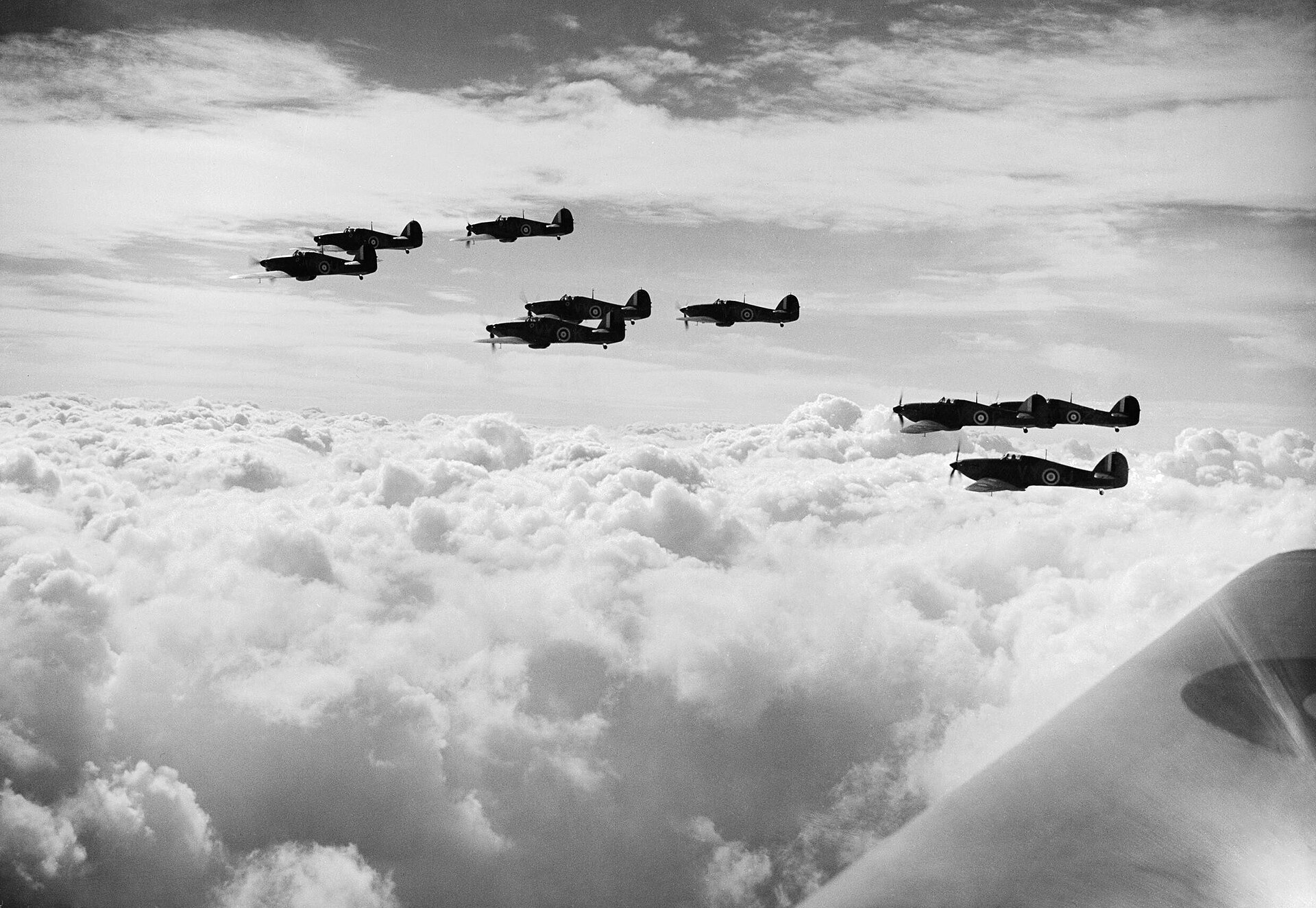
Lead image: Hurricanes of No. 85 Squadron RAF, 1940. Royal Air Force, Public domain, via Wikimedia Commons. See our sources and image policy.
 United Kingdom
 United States
 Soviet Union
 Germany
 Japan
 France
 Poland
 South Africa