Pacific · Leaders · United States
Nimitz Takes the Pacific
Ten days after Pearl Harbor, Roosevelt picks a quiet Texan admiral, Chester Nimitz, to take command of what is left of the Pacific Fleet.
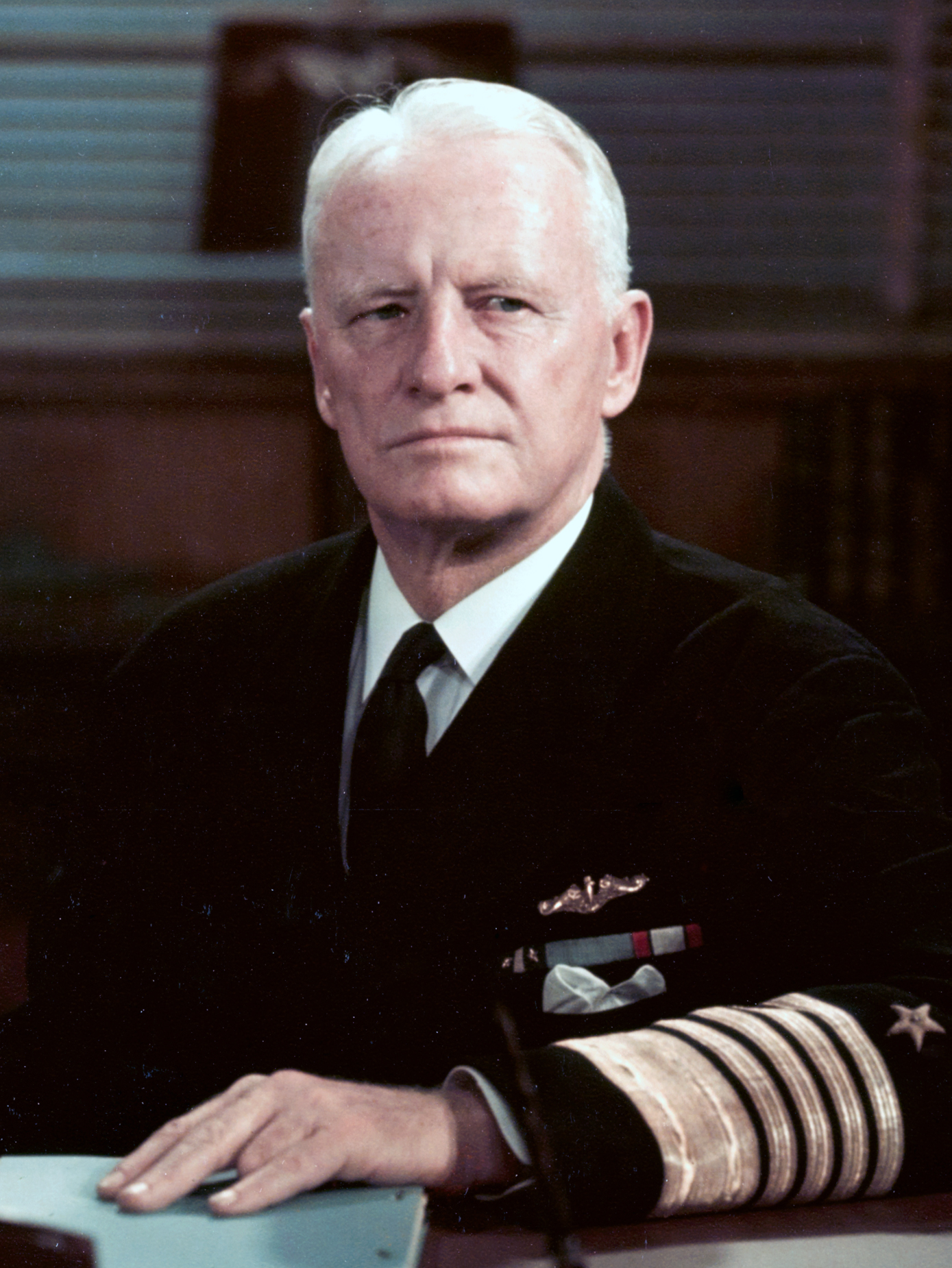
- Appointed
- Admiral Chester W. Nimitz
- Replacing
- Admiral Husband E. Kimmel
- Took command
- 31 December 1941, at Pearl Harbor
- Later role
- Commander in Chief, Pacific Ocean Areas
- War clock
- Day 839 of 2,194
Admiral Husband Kimmel, commander of the US Pacific Fleet, was relieved of command on 17 December 1941 as the scale of the Pearl Harbor disaster sank in. To replace him, Roosevelt and Navy Secretary Frank Knox chose Rear Admiral Chester Nimitz, then head of the Bureau of Navigation in Washington. Nimitz, a calm, methodical submariner from Texas, was promoted two grades over many senior officers.
Command on a submarine
Nimitz flew to Hawaii and arrived to find the harbour still choked with wrecks and oil. On 31 December he assumed command in a ceremony on the deck of the submarine Grayling, reportedly because a submarine deck was the only one available. He kept most of Kimmel’s staff, telling them he had confidence in them, a decision that steadied a shaken command.
The carrier war
With the battleships out of action, Nimitz built his strategy around his carriers. Within months they were raiding Japanese bases, and in May and June 1942 he used codebreaking intelligence to fight the battles of the Coral Sea and Midway. As Commander in Chief, Pacific Ocean Areas, he directed the island-hopping campaign across the Central Pacific, and on 2 September 1945 he signed the Japanese surrender for the United States in Tokyo Bay.
Also on 17 December
- 1944SS troops of Kampfgruppe Peiper murder captured American soldiers at the Baugnez crossroads near Malmedy, Belgium.
- 1941The relief force sent to reinforce the Wake Island garrison is still days away as the island’s defenders hold out.
Sources and further reading
Lead image: Admiral Chester W. Nimitz. US Navy, Public domain, via Wikimedia Commons. See our sources and image policy.
 United Kingdom
 United States
 Soviet Union
 Germany
 Japan
 France
 Poland
 South Africa