Western Front · The Holocaust · Britain and Germany
The Liberation of Bergen-Belsen
Under a local truce, British troops enter Bergen-Belsen. They find around 60,000 prisoners, many dying of typhus and starvation, and thousands of unburied dead.
- Location
- Near Celle, Lower Saxony, Germany
- Liberated by
- British 11th Armoured Division
- Survivors found
- Around 60,000
- Died after liberation
- Around 14,000, despite relief efforts
- War clock
- Day 2,054 of 2,194
Bergen-Belsen began as a prisoner-of-war camp and later held Jews intended for exchange. From late 1944, as camps in the east were evacuated, tens of thousands of prisoners were sent there. The camp could not cope. Food and water ran out, and typhus spread unchecked. Anne Frank and her sister Margot died there in early 1945.
The truce
As British forces approached, the German army negotiated a local truce so that the camp, with its epidemic, would be handed over. On 15 April 1945 British troops entered. What they found shocked even hardened soldiers.
The aftermath
Medical teams, soldiers and volunteers, including British medical students, struggled to save the survivors, but thousands were too weak to recover. The huts were later burned to stop the spread of disease. The BBC correspondent Richard Dimbleby’s report from the camp brought its horrors to listeners in Britain.
Sources and further reading
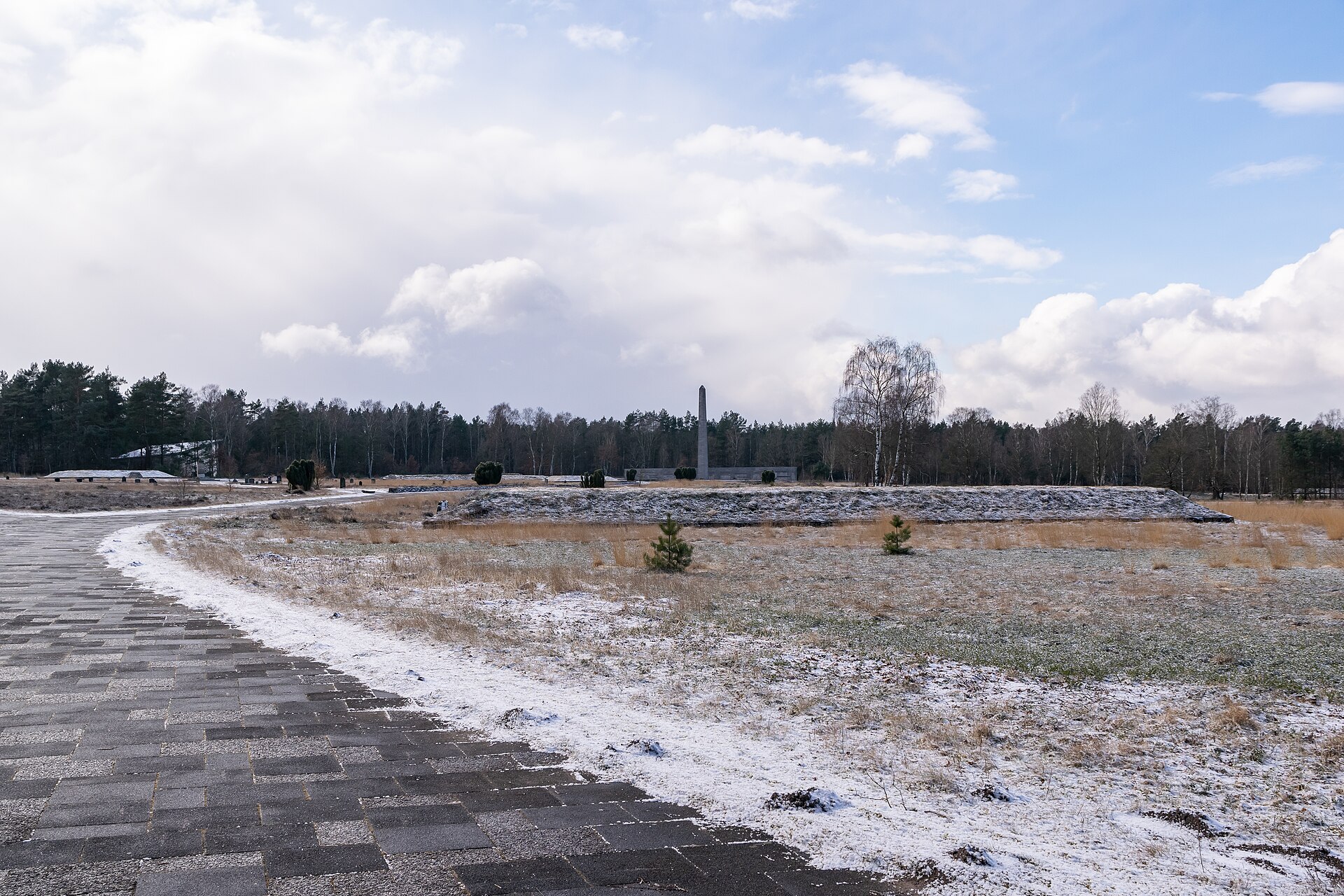
Lead image: The memorial site at Bergen-Belsen today. Tsungam, CC BY-SA 4.0 (licence), via Wikimedia Commons. See our sources and image policy.
 United Kingdom
 United States
 Soviet Union
 Germany
 Japan
 France
 Poland
 South Africa