Western Front · Land Battles · Germany vs France, Britain and the Low Countries
Germany Attacks in the West
At dawn, German forces invade the Netherlands, Belgium and Luxembourg. By evening, Neville Chamberlain has resigned and Winston Churchill is Prime Minister.
- Operation
- Fall Gelb (Case Yellow)
- Invaded
- Netherlands, Belgium, Luxembourg
- Key coup
- Glider troops capture Fort Eben-Emael
- New Prime Minister
- Winston Churchill, appointed that evening
- War clock
- Day 253 of 2,194
After eight months of Phoney War in the west, Germany struck on 10 May 1940. Paratroopers and glider-borne troops seized bridges and airfields in the Netherlands, and a small force landed by glider on top of the Belgian fortress of Eben-Emael and put it out of action. German armies crossed the borders of the Netherlands, Belgium and Luxembourg.
The trap
As planned, the British Expeditionary Force and the best French armies advanced into Belgium to meet what they believed was the main attack. In fact the heaviest German blow, with most of the panzer divisions, was moving through the Ardennes forest in Luxembourg and southern Belgium, aimed at the Meuse at Sedan.
Churchill
In London, Neville Chamberlain’s government had been badly shaken by the failure in Norway. On the evening of 10 May he resigned, and King George VI asked Winston Churchill to form a government.
Also on 10 May
- 1941Rudolf Hess, Hitler’s deputy, flies alone to Scotland on a mission of his own to seek peace and is taken prisoner.
Sources and further reading
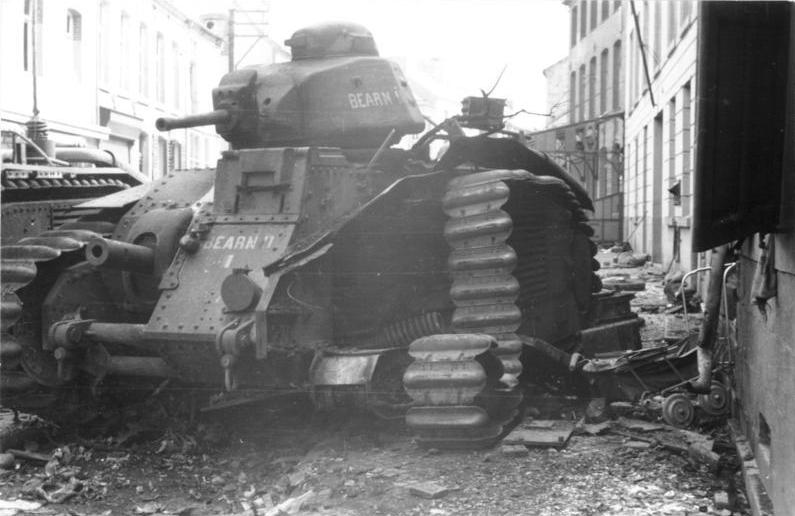
Lead image: A French Char B1 tank knocked out in the west, 1940. Heinz Fremke, CC BY-SA 3.0 de (licence), via Wikimedia Commons. See our sources and image policy.
 United Kingdom
 United States
 Soviet Union
 Germany
 Japan
 France
 Poland
 South Africa